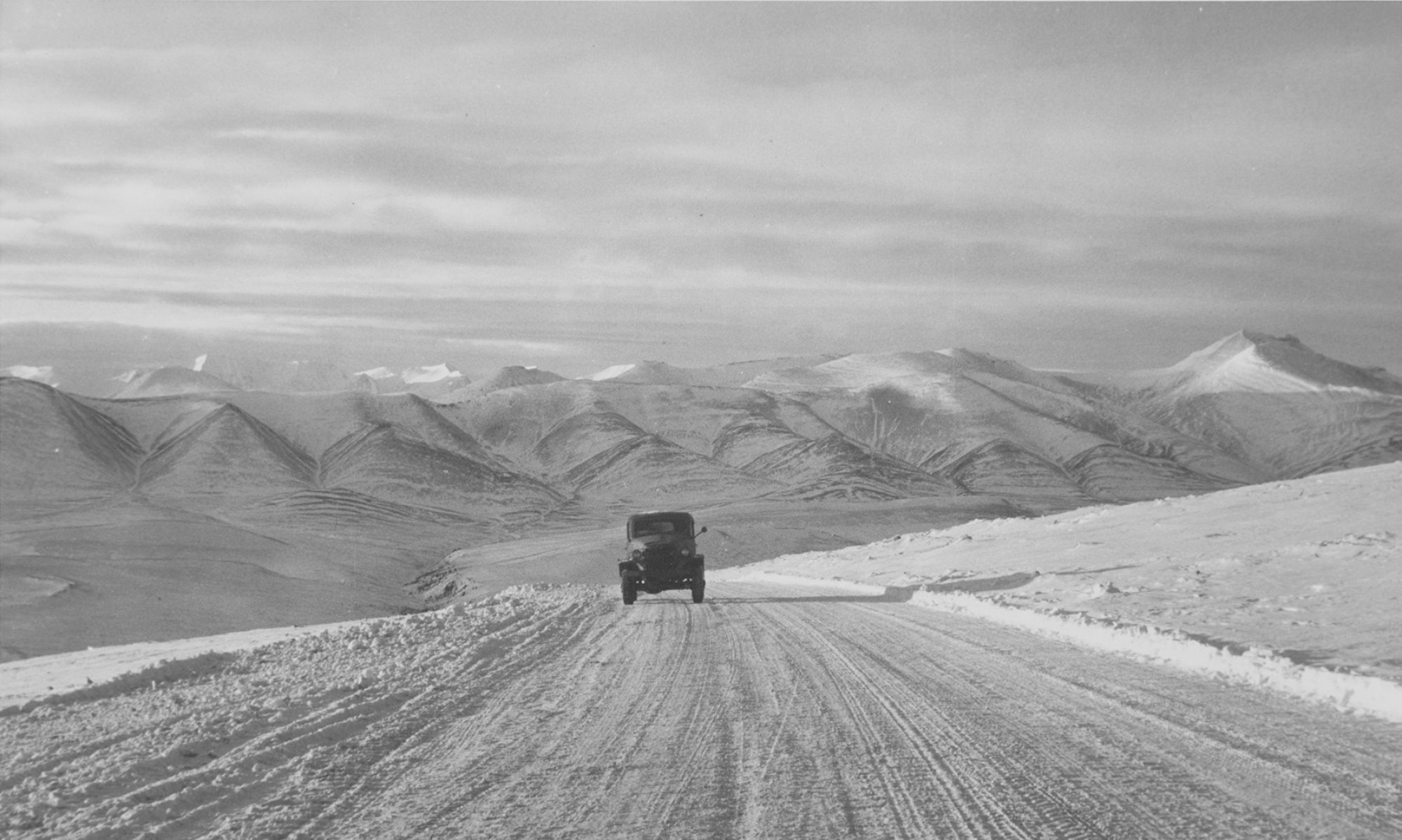
Many thanks to the Women’s Environmental History Network, which has chosen A Cold Colonialism as their featured book for fall 2026. You can check out its page on their website here!
New H-Environment Roundtable Review on Hanne Nielsen’s Brand Antarctica
My latest H-Environment Roundtable Review centres on Hanne Elliot Fønss Nielsen’s Brand Antarctica: How Global Consumer Culture Shapes Our Perceptions of the Ice Continent (University of Nebraska Press, 2023). It features commentaries by Rebecca Priestley, Adrienne van Eeden-Wharton, Hester Blum, and Rohan Howitt, as well as my introduction and a response by Nielsen.
You can check the roundtable out here!
New H-Environment Roundtable Review on Andrew Denning’s Automotive Empire
My latest H-Environment Roundtable Review centres on Andrew Denning’s Automotive Empire: How Cars and Roads Fueled European Colonialism in Africa (Cornell University Press, 2024). It features commentaries by Marc Landry, Corey Ross, Stéphanie Ponsavady, and Noelle Turtur, as well as my introduction and a response by Denning.
You can check the roundtable out here!
New co-edited blog series: Succession IV: Queering the Environment – Queer Joy (NiCHE)
For Pride Month in 2026, Jessica DeWitt, Sarah York-Bertram and I co-edited the fourth biennial edition of the series “Succession: Queering the Environment” for NiCHE’s blog, The Otter~La loutre. This year’s theme was “Queer Joy.” We asked contributors to build off of scholarship and lived knowledge that envisions queer joy as a way of knowing and being in relation with the environment and more-than-human beings.
You can find the series’ twelve posts here, and my conclusion to the series here. In the latter, I reflect on five themes that cross-cut the series, and which future scholars of queer joy in environmental history and the environmental humanities might consider building on. I also share a sliver of my own research-in-progress into queer history!
A Cold Colonialism wins 2026 Clio Prize (The North)!
I’m delighted to share that A Cold Colonialism has won the Canadian Historical Association’s 2026 Clio Prize (The North)! Here is the award citation, originally published on the CHA’s website:
Tina Adcock’s A Cold Colonialism is a highly innovative historical study which reassesses northern exploration during the first half of the 20th century as framing a modern North for audiences outside the region and aiding industrial resource developments but also entrenching colonialism. Focusing on four individuals, George Douglas, Guy Blanchet, Richard Finnie, and Vilhjalmur Stefansson, whom Adcock considers explorers in a very broad sense and studies as members of a “community of northern interest,” she uncovers new stories of knowledge collaboration and old stories of exploration steeped in a culture of colonialism. She examines these explorers through pairing them with each other, which is one of the most commendable analytical achievements of the book. By bringing these four men together in ever changing constellations, Adcock skillfully draws the reader into the many complicated intersections between science, government and corporate interests in the Canadian arctic and subarctic and the construction of the region as modern and industrial. At the same time, Adcock shows how knowledge claims about the region became increasingly contested while they were legitimized through first-hand embodied or relational experiences which excluded Indigenous or female expertise. Adcock engages commendably with a broad range of historical approaches and consulted a diversity of archival material. Her book provides a new lens on northern exploration, one that reminds us of the controlling construction of the region from the outside.
New H-Environment Roundtable Review on Gretchen Heefner’s Sand, Snow, and Stardust
My latest H-Environment Roundtable Review centres on Gretchen Heefner’s Sand, Snow, and Stardust: How US Military Engineers Conquered Extreme Environments (University of Chicago Press, 2025). It features commentaries by Toshihiro Higuchi, Dario Fazzi, Paul Landsberg, and Ruth Lawlor, as well as my introduction and a response by Heefner.
You can check the roundtable out here!
New review of A Cold Colonialism: Cristina-Georgiana Voicu for British Journal of Canadian Studies
Thanks to Cristina-Georgiana Voicu for her review of A Cold Colonialism in the British Journal of Canadian Studies. (It’s paywalled, but the full text is captured in the abstract.)
A Cold Colonialism shortlisted for 2026 Best (English-Language) Scholarly Book in Canadian History Prize!
I’m honoured, and thrilled, that A Cold Colonialism has been shortlisted for the Canadian Historical Association’s 2026 Best (English-Language) Scholarly Book in Canadian History Prize! Many congratulations to my fellow nominees.
You can view the full shortlist here.
New review of Howkins and Roberts’ Cambridge History of the Polar Regions for H-Sci-Med-Tech
H-Sci-Med-Tech has just published my review of Adrian Howkins and Peder Roberts’ edited volume, The Cambridge History of the Polar Regions (Cambridge University Press, 2023). Among other pleasures associated with reading this book, it was great to have the excuse to catch up on the recent historiography of Antarctica!
Click here to read the review.
New podcast interview with Sean Kheraj on Nature’s Past
In episode 77, “Modern Exploration and the Canadian North,” I chat with Sean Kheraj – which is always such a delight – about A Cold Colonialism.
Many thanks to Sean for making time to speak with me, and for editing and releasing this episode so quickly amidst his very busy schedule!